
Why Use a Certified Translator for Legal Documents?
A certified translator for legal documents gives you precise wording, a signed certificate and a named person who stands behind the work.
A contract clause that says a party "shall" pay becomes a clause that says it "may" pay. One small word change turns a duty into an option. In a translated legal document, that kind of slip can cost you money, time or a court date.
This post explains why a certified translator is the safer choice for legal documents. It also covers what certification does and does not prove, and when you may not need it.
Key Takeaways
- A certified translation comes with a signed statement from the translator or company that the translation is complete and accurate.
- Legal wording is exact. A certified legal translator knows how one word can change an obligation.
- An apostille or a notary stamp does not vouch for the quality of a translation.
- Always confirm what the receiving office requires before you order.
What is a certified translation?
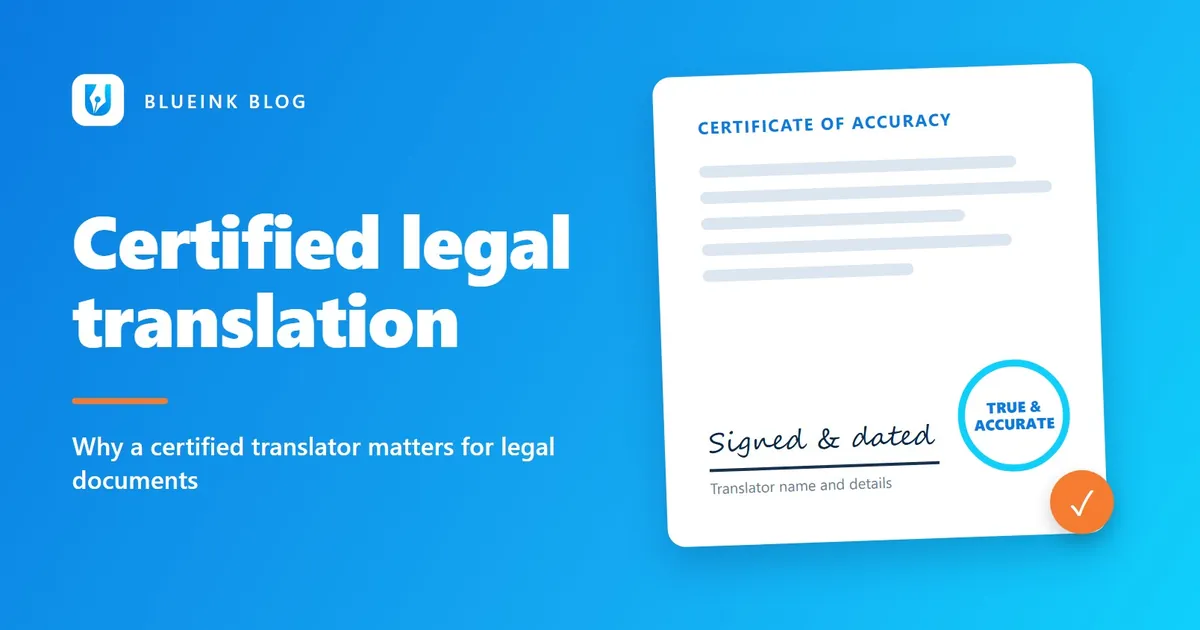
A certified translation is a full translation with a signed and dated certificate. The certificate states that the translation is a true and accurate rendering of the original. It usually carries the translator's contact details and often a stamp or seal. Our guide to certified translation in India lists the usual documents and what to ask for.
Certification is not the same as notarization or an apostille. A notary confirms who signed a document. An apostille, which is an official stamp that lets a public document be accepted in other member countries, does something narrower still. The sections below explain the difference.
Why does a certified translator matter for legal documents?
Here are six reasons, from the wording itself to the paperwork around it.
1. Legal wording is exact
Legal language leaves little room for approximation. "Shall", "may" and "must" each create a different level of obligation. When a contract is translated into Hindi or Tamil, a word meaning "shall" must not become one meaning "may". That would change what each party has agreed to do.
A translator who works with legal text every day knows which term carries which weight. They also know when a phrase has no direct equivalent and needs careful handling instead of a literal match.
2. Someone is accountable for the result
A certificate puts a name and a signature behind the translation. If the receiving office has a question, there is a person who can answer it.
That accountability is the main thing certification adds. It is also something other stamps do not give you.
3. An apostille or notary stamp does not check the translation
This point surprises many buyers. An apostille is issued under the Hague Apostille Convention. It certifies the authenticity of the signature, the capacity of the signer and, where appropriate, the identity of the seal or stamp (HCCH, Convention text, Article 5).
It says nothing about whether a translation is correct. India's Ministry of External Affairs makes a related point about its legalization service. The Ministry says it "does not take responsibility of the contents of the documents" (Ministry of External Affairs, Apostille).
India has been a member of the Convention since 2005, according to the same page. For you, the lesson is simple. Stamps prove where a document came from. A certified translator answers for what the translation says.
4. Names, dates and numbers must match across documents
Official offices compare documents against each other. A person's name spelled one way on a passport and another way on a certificate, because of different spellings of the same sounds, can cause a mismatch. A date written day-first in one place and month-first in another can cause a worse one.
A certified legal translator checks these details against the source and keeps them consistent. That careful checking helps prevent mismatches that an office may query.
5. Legal ideas do not always travel word for word
Legal systems organize rights and duties differently. A term in one system may have no exact twin in another. A good legal translator chooses the closest accurate rendering and, where needed, adds a short note rather than guessing.
This is also why machine output is a poor fit here. Our guide to using AI in translation explains where software helps and why legal sign-off stays with a person.
6. You avoid delays and rework
A rejected translation means rework and lost time. Applications can stall and filing dates can slip. Getting the certificate, wording and formatting right the first time helps keep your timeline on track.
Confidentiality matters here as well. Legal documents often hold personal or commercial details. Ask any provider how they handle your files, and get the answer in writing.
What should you check before you order?
Start with the receiving organization, not the translator. Courts, government offices, universities and embassies set their own rules. Some want a certificate from a company. Others want a notarized statement, where a notary confirms who signed it. A few accept only specific formats.
Send the translator clear scans of the original, including stamps and handwritten notes. Then confirm four things:
- What the receiving office asks for. Get the requirement in writing if you can.
- Who signs the certificate. It should be a named person or a named company.
- What the certificate says. It should state that the translation is complete and accurate.
- How names and numbers are checked. Ask for a review of names, dates and numbers against the original.
Do you always need a certified translator?
No. Documents you only need to understand, such as a draft contract you are reading internally, may not need certification. A plain, careful translation can be enough. Certification is for documents you will submit to an official body, rely on in a dispute or sign.
If you are unsure, ask the receiving office first. It is a short question that can save a full re-order.
Frequently Asked Questions
What is the difference between a certified and a notarized translation?
A certified translation includes a signed statement from the translator or company that the translation is accurate. A notarized translation adds a notary, who confirms the identity of the person signing. The notary does not check translation quality.
Does an apostille make a translation valid?
Not by itself. An apostille certifies the origin of a public document, meaning the signature, the signer's capacity and the seal. It does not confirm that a translation is correct. Check what the receiving office wants for the translation itself.
Which legal documents usually need certified translation?
Contracts, court documents, powers of attorney, company documents, birth, marriage and death certificates, and academic or police records are common examples. The receiving organization makes the final call, so confirm with it before you order.
Can machine translation be used for legal documents?
It can help you read a document quickly. It should not be used as the final version for anything you submit or sign. Legal and certified work needs a qualified person to review and sign off.
What should you do next?
List the documents you need, and note who will receive them and what they require. Then talk to a provider who can explain who signs the certificate and how the work is checked. Blueink offers certified translation within its legal translation and document translation services, and quality is checked in-house. To discuss your documents, write to projects@blueinki.com.
Originally published March 27, 2024. Updated November 17, 2026. Facts from the Hague Conference on Private International Law and India's Ministry of External Affairs were checked against their pages on the update date. This is general information, not legal or regulatory advice.
Sources
- Hague Conference on Private International Law (HCCH), Convention of 5 October 1961 Abolishing the Requirement of Legalisation for Foreign Public Documents (Apostille Convention), full text
- HCCH, Apostille Convention status table, last updated June 30, 2026
- Ministry of External Affairs, Government of India, Apostille, last updated October 22, 2026
Need help with document translation?
Tell us about your project and we will send a free, no-obligation quote.
More from the blog
Certified Translation in India: When You Need It and What to Ask For
Visa, university and court applications often ask for a certified translation. Here is what that means and how to order one.
E-Learning Localization: Check These Before You Translate
E-learning localization goes wrong when a course is sent for translation too early. Check these seven things first to save time and rework.
Localization vs Translation: What's the Difference, and Which Do You Need?
Translation changes the words. Localization changes the whole experience. Here is how to tell which one your content needs.