Certified Translation in India: When You Need It and What to Ask For
Visa, university and court applications often ask for a certified translation. Here is what that means and how to order one.
If you have been asked for a "certified translation", the requesting organisation wants a translation with a signed statement confirming that it is complete and accurate. Requirements differ between organisations and countries, so the first step is always to check exactly what they accept.
What a certified translation usually includes
- The full translation, matching the layout of the original as closely as possible.
- A signed and dated certificate from the translator or the translation company, stating the translation is a true and accurate rendering of the original.
- The translator or company contact details.
- Often a stamp or seal, and sometimes a copy of the original attached.
Documents that often need one
- Birth, marriage and death certificates
- Passports and identity documents
- Academic transcripts, degrees and certificates
- Police clearance and other official records
- Court documents, contracts and powers of attorney
- Financial and company registration documents
Certified, notarised and apostilled: they are not the same
- Certified: the translator or company vouches for accuracy.
- Notarised: a notary public confirms the identity of the person signing, not the quality of the translation.
- Apostille or legalisation: an official authentication of the document for use abroad, handled by the relevant authority.
Some authorities ask for one, some for a combination. Confirm with them before you order so you do not pay twice.
Checklist before you order
- Ask the receiving organisation what format and level of certification they accept.
- Send a clear, complete scan or photo of every page, including stamps and handwriting.
- Check the spelling of names against your passport and tell your translator which spelling to use.
- Mention the deadline and how you need delivery, digital, hard copy or both.
- Ask for a review of the translated names, dates and numbers before final sign-off.
Blueink provides certified translation across many languages and domains. Upload your document for a quote and tell us who it is for, so we can match their requirements.
Need help with document translation?
Tell us about your project and we will send a free, no-obligation quote.
More from the blog
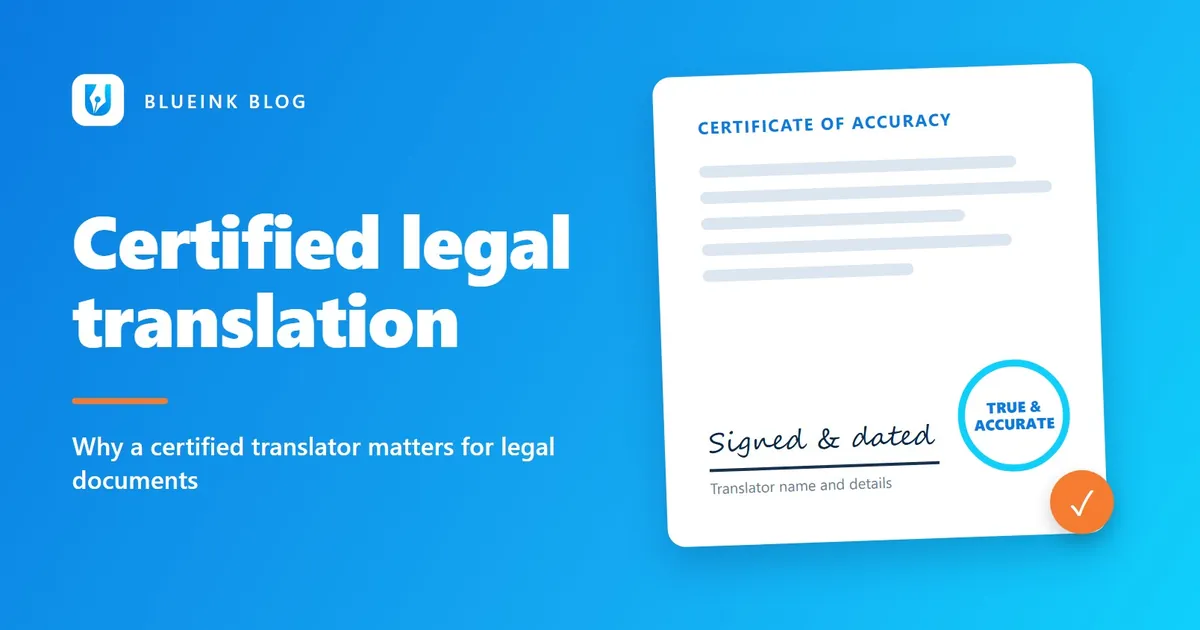
Why Use a Certified Translator for Legal Documents?
A certified translator for legal documents gives you precise wording, a signed certificate and a named person who stands behind the work.
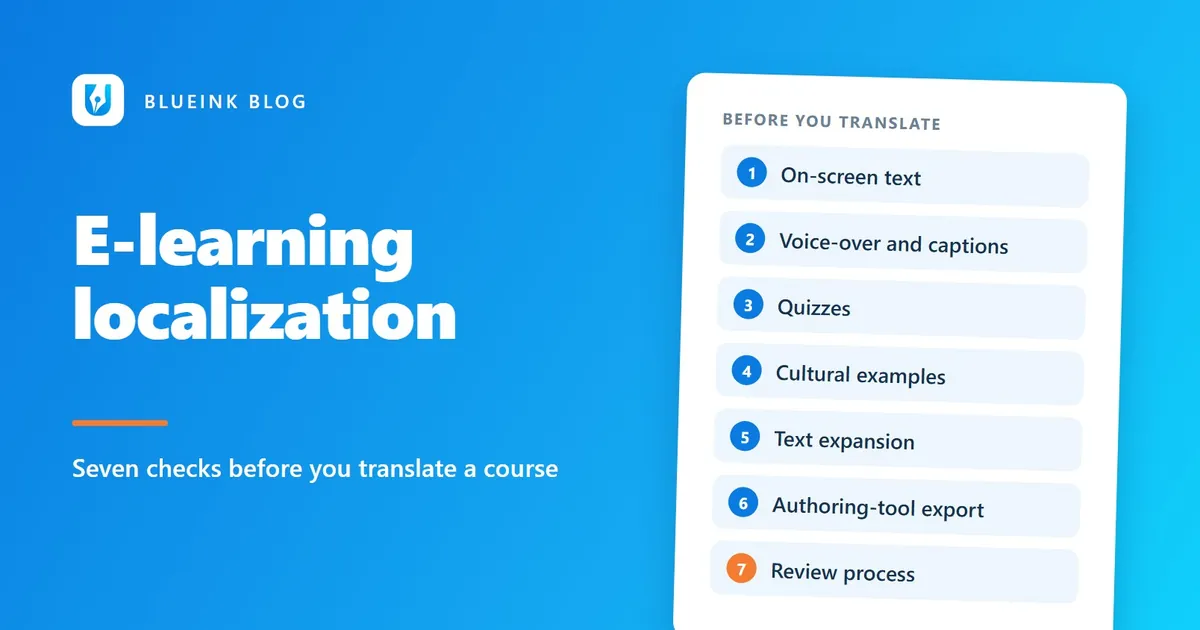
E-Learning Localization: Check These Before You Translate
E-learning localization goes wrong when a course is sent for translation too early. Check these seven things first to save time and rework.
Localization vs Translation: What's the Difference, and Which Do You Need?
Translation changes the words. Localization changes the whole experience. Here is how to tell which one your content needs.